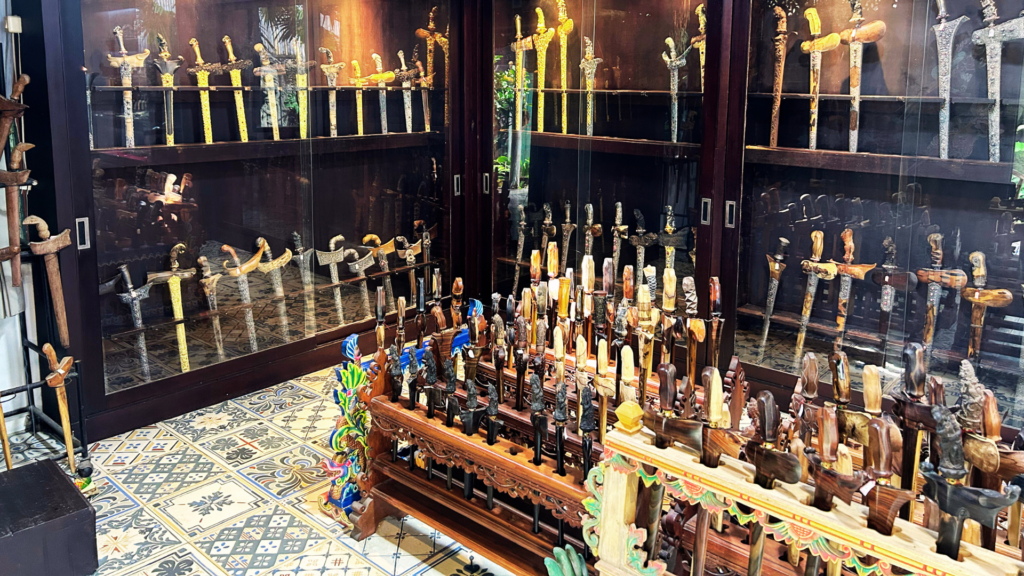
Keris as a Cultural Heritage of the Archipelago Full of Meaning
The keris is one of the oldest cultural symbols in Indonesia, rich in philosophy, history, and spiritual value. More than just a sharp weapon, the keris is a cultural artifact that represents the identity and pride of the nation. Since the 9th century, the keris has been known as both a weapon and a sacred heirloom, used by kings, nobles, and spiritual leaders. Each keris is forged using traditional techniques by an empu — a master keris maker believed to possess special knowledge and spiritual capabilities. Behind its unique shape, the keris is believed to carry certain energies that can protect, bring fortune, and even enhance the authority of its owner. It is no surprise that the keris is still used today in traditional ceremonies, weddings, and as a symbol in military and governmental institutions. In 2005, UNESCO officially recognized the keris as a “Masterpiece of the Oral and Intangible Heritage of Humanity,” marking global acknowledgment of this rich Indonesian heritage that must be preserved. Indonesia’s cultural diversity is reflected in the wide variety of keris found across different regions — each with its own distinct shape, pamor (metal patterns), and symbolic meaning.